
Great creative testing isn’t a project—it’s a habit. Here’s the workflow teams use to test every concept before it sees daylight.
Monday: Concept Clinic
Morning stand-up. Team pitches raw ideas. Sketch headlines. Mock layouts. No perfectionism.
Upload sketches to Kettio. Test against core audience. Kill 60% before lunch.
Tuesday: Rapid Refinement
Winners get detailed. Write copy. Choose images. Build three variations per concept.
Test variations. Learn: “Headline A wins by 25%, but Image C feels fake.”
Wednesday: Production Preview
Shoot rough video. Build simple graphics. Test again.
Validate: “Product shot at 0:03 seconds kills interest. Move it to 0:08.”

Thursday: Final Validation
Polished creative gets last test. 1,000 synthetic reviews. Score >4.0? Green light.
Score <4.0? Iterate once more.
Friday: Launch Ready
Export assets. Build campaign. Sleep well—every element is pre-validated.
Tools You Need
- Shared Kettio dashboard
- Slack channel: #creative-scores
- Simple rule: nothing ships untested
Team Roles
Copywriter: owns headlines, tests by 11 a.m.
Designer: uploads visuals, reads feedback by 2 p.m.
Media buyer: checks scores before building audiences
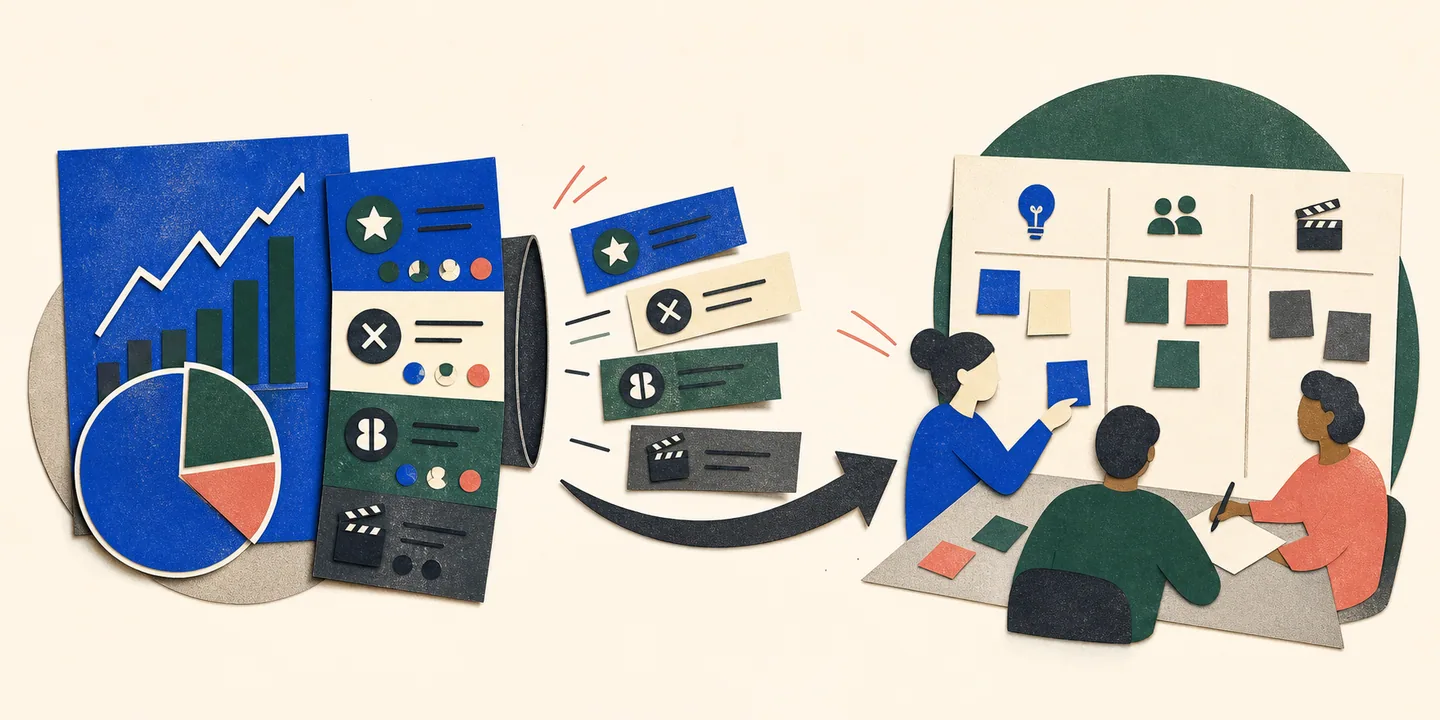
Metrics That Matter
- Purchase intent ≥4.0
- Relevance ≥80%
- Written feedback with zero red-flag words (“confused,” “expensive,” “boring”)
Real Team Results
SaaS startup adopted this flow. Testing time: 2 days → 2 hours. Campaign ROAS: 2.1x → 4.6x. Team size: same.
Template to Steal
Trello list: Ideas → Sketch → Test → Refine → Validate → Launch
Each card shows Kettio score and one-line “why” from synthetic audience.
Bottom Line
Build testing into every day. Ideas improve, budgets stretch, campaigns win.
Try it on your ads
Compare your own ads, free.
Upload two static ads, choose your buyer, and get a quick prediction with clear next steps. No signup or credit card.
Find my winning ad →