
On this page8 sections
- What an ad creative back-test measures
- Step 1: Build a usable historical creative set
- Step 2: Choose the decision you want to validate
- Step 3: Freeze the inputs and hide the outcomes
- Step 4: Rank the batch for one buyer and goal
- Step 5: Reveal the outcomes and score the decision
- Step 6: Decide the production rule before deployment
- The standard to use
Most creative-scoring tools are demonstrated on examples chosen by the company selling the tool. That is not enough evidence for a performance team.
A better test starts with your own historical ads. Hide the outcomes, rank the creative blind, and only then compare the prediction with what happened in market. This is an ad creative back-test.
The goal is not to prove that a model can predict an exact CPA or ROAS. The useful question is narrower: can it consistently keep real winners in the launch shortlist and push obvious losers toward the bottom?
What an ad creative back-test measures
A back-test evaluates a decision rule using outcomes that already exist but were hidden from the system when it made its prediction. For paid social creative, the inputs are the ads and campaign context. The holdout truth is the performance data.
A clean back-test can answer four practical questions:
- Did the historical winner appear near the top of the predicted ranking?
- How often did the shortlist contain at least one real winner?
- Did the system reliably identify weak creative that should not have received meaningful spend?
- Was the written rationale useful enough to guide the next creative iteration?
That is different from ordinary A/B testing. Meta’s auction evaluates an ad after launch using the objective, audience, budget, duration, and creative together. Meta explains that delivery then learns who is most likely to respond. A pre-launch back-test happens upstream: it decides which concepts deserve entry into that live system in the first place. See Meta’s explanation of the ad auction.
Step 1: Build a usable historical creative set
Start with one brand, one platform, and one reasonably consistent campaign objective. A mixed folder containing prospecting ads, retargeting ads, lead-generation creative, and awareness campaigns will produce an ambiguous result.
For a first pilot, collect 50 to 200 creative assets with:
- A stable asset ID or filename
- The image or video used in market
- Primary text and headline when available
- Audience or campaign type
- Objective and optimization event
- Spend, impressions, purchases, CPA, ROAS, CTR, or another agreed outcome
Do not cherry-pick only the beautiful ads or only the winners. The system needs the ordinary middle and the expensive misses too.

Step 2: Choose the decision you want to validate
Know which ad to scale before you spend.
Upload two static ads, choose your buyer, and get a quick prediction with clear next steps. No signup or credit card.
Decide the winner definition before anyone sees the predictions. “Best ad” is not specific enough.
For an acquisition team, the primary outcome might be purchase volume with a minimum spend threshold. For a lead-generation team, it might be qualified leads rather than raw form fills. For a lower-funnel catalog campaign, it might be CPA or ROAS after excluding ads that never received enough delivery.
Write the rule down. Examples:
- Winner = lowest CPA among ads with at least $1,000 in spend
- Winner = highest purchase rate among assets with at least 10,000 impressions
- Winner = top quartile of qualified-lead rate
The thresholds will vary by account. The important part is freezing them before scoring.
Step 3: Freeze the inputs and hide the outcomes
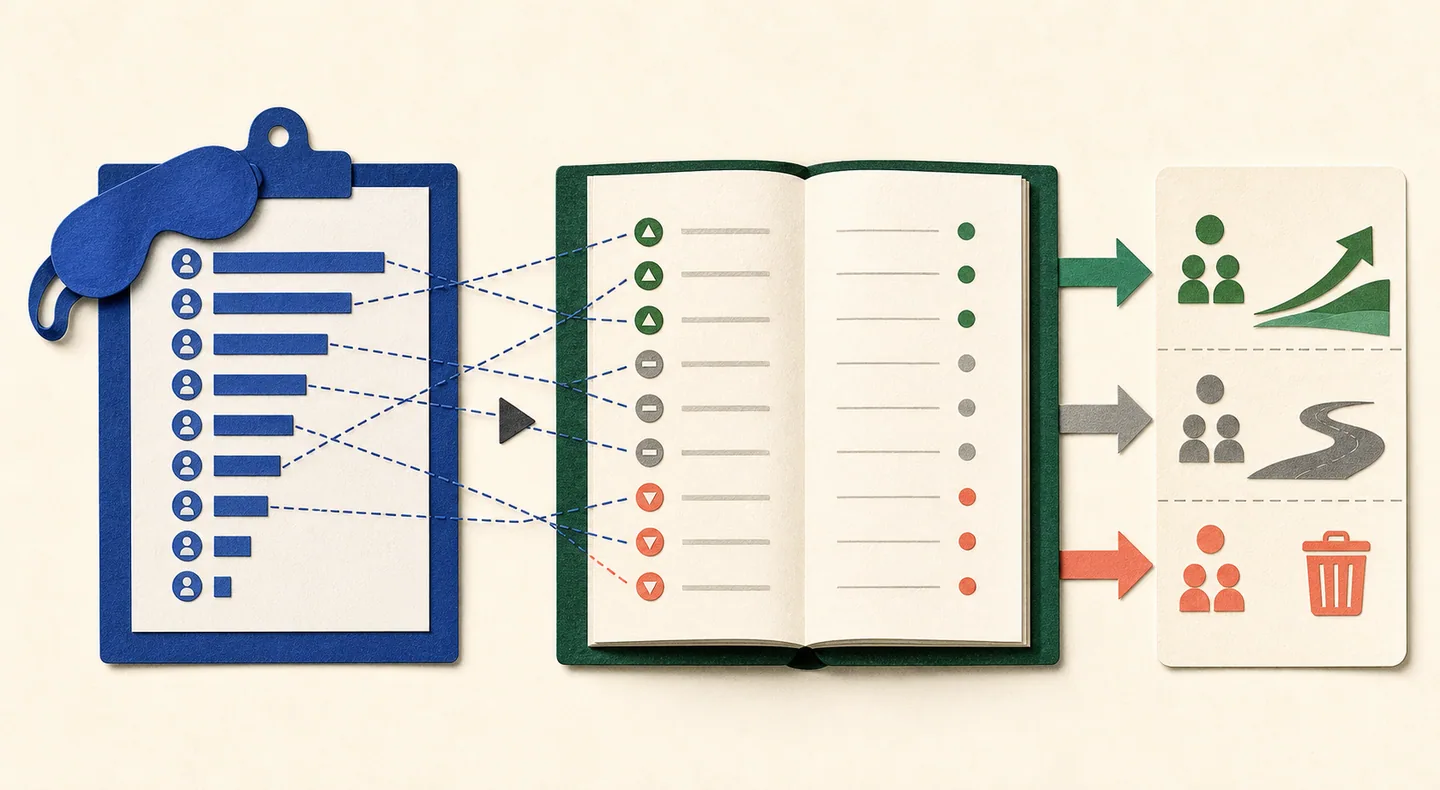
Create two files. The scoring file contains only the creative and campaign context. The outcome file contains the performance truth. Whoever runs the scoring should not see winner labels, spend, CPA, or ROAS until every prediction is complete.
This prevents hindsight from leaking into the exercise. It also makes reruns auditable: the same asset set, audience brief, objective, and scoring version can be compared later.
Step 4: Rank the batch for one buyer and goal
Score the full set under a consistent audience and campaign objective. Do not change the audience description halfway through because an early result looks strange.
The output should include more than a single score. Capture:
- Relative rank
- Shortlist or hold recommendation
- Confidence
- Buyer-specific rationale
- Any input or rendering failures
Kettio’s blind back-test is built around this workflow. Small teams can also find a winning ad with a free two-ad prediction before preparing a larger historical batch.
Step 5: Reveal the outcomes and score the decision
Do not judge the result by whether the top-ranked ad is an exact match once. Measure the decision quality across the batch.
Useful metrics include:
- Top-one accuracy: how often the predicted leader was the real winner
- Shortlist winner containment: how often the real winner appeared in the top two, three, or top quartile
- Rank correlation: whether the predicted order moves in the same direction as the outcome order
- Loss avoidance: how much spend went to ads the model placed in the bottom group
For creative operations, shortlist containment is often the most useful first measure. A system can add value without making a perfect top-one call if it reliably reduces a 100-ad batch to a much stronger group of 10 or 20.
Step 6: Decide the production rule before deployment
A back-test is not permission to automate every launch. Convert the result into a narrow operating rule.
For example: hold the bottom 25%, send the top 20% to the media buyer, and require human review for the middle. Or use the ranking only to decide which creative gets the first controlled spend allocation.
Meta recommends creative diversification because different messages can reach different people. A pre-launch ranking should support that diversity, not collapse a campaign into one visually similar concept. See Meta’s current guidance on creative diversification and performance marketing.
The standard to use
A credible creative back-test is blind, scoped, repeatable, and tied to a decision. It does not promise an exact future CPA. It shows whether a pre-launch ranking would have helped your team fund more winners, cut more losers, or learn faster from the creative you already paid to produce.
If you have a historical Meta export and 50 or more assets, apply for a blind Kettio back-test. We will agree on the winner definition before the outcomes are revealed.
Frequently asked questions
What is an ad creative back-test?
An ad creative back-test ranks historical ads without seeing their performance outcomes, then compares the frozen predictions with real purchases, CPA, ROAS, CTR, or qualified leads.
How many ads do you need for a creative back-test?
A useful first pilot usually contains 50 to 200 ads from one brand, platform, and reasonably consistent campaign objective. Smaller comparisons can be directional but provide less evidence.
Does a creative back-test predict exact CPA or ROAS?
No. The practical goal is to test whether the ranking keeps real winners in the launch shortlist and identifies weak creative before more media budget is committed.
What is shortlist winner containment?
Shortlist winner containment measures how often the real historical winner appears inside the model’s top two, top three, or other pre-defined shortlist, even when it is not ranked first.
Compare your own ad creatives — free.
Upload two static ads, choose your buyer, and get a quick prediction with clear next steps. No signup or credit card.
Find my winning ad →