
On this page9 sections
- The 15-Second Funnel
- Failure Point #1: Your Thumbnail Isn’t Stopping the Scroll
- Failure Point #2: Your Hook Is Getting Views, Not Buyers
- Failure Point #3: Your Listing Breaks the Promise
- Failure Point #4: You’re Missing Critical Trust Signals
- Failure Point #5: Your Pricing Lacks Context
- The Diagnostic: Find Your Specific Leak
- What Transformation Looks Like
- The Bottom Line
Fifty thousand views. A hundred thousand. Maybe half a million.
You’ve checked your TikTok Shop analytics so many times the numbers have started to blur together. The reach is real. The engagement—likes, comments, shares—is there. But then you open your sales dashboard and feel the familiar thud of disappointment.
Crickets. Or close enough to it.
Welcome to the most expensive problem in social commerce: the views-to-revenue gap. It’s an epidemic among TikTok Shop sellers in 2025, and it’s costing entrepreneurs not just money but momentum, confidence, and the belief that this platform can actually work for them.
Here’s the reality check that hurts: TikTok Shop’s organic conversion rates typically land between 0.5% and 1.5%. Influencer-driven content can push that to 5%. Compare that to Facebook Ads, which average 9.21% across industries, and the gap is stark.
But averages lie. Some sellers convert at 3–5% consistently. Others—plenty of others—languish below 0.1% despite view counts that should make them wealthy. The difference isn’t the algorithm playing favorites. It’s not luck. It’s a systematic breakdown somewhere in the conversion funnel, and most sellers don’t know where to look.
This is where to look.
The 15-Second Funnel
Traditional e-commerce stretches the customer journey across days or weeks: awareness, consideration, decision, purchase—each stage separated by time and touchpoints.
TikTok Shop collapses all of it into 15 seconds.
flowchart LR
    A["Hook
    0-3 sec"] --> B["Demonstration
    4-8 sec"]
    B --> C["Validation
    9-12 sec"]
    C --> D["Purchase
    13-15 sec"]

    style A fill:#ff6b6b,color:#fff,stroke:#ff6b6b
    style B fill:#4a90d9,color:#fff,stroke:#4a90d9
    style C fill:#f0a030,color:#fff,stroke:#f0a030
    style D fill:#51cf66,color:#fff,stroke:#51cf66
That compression is the platform’s superpower—and its trap. Get every element right, and you have a conversion machine. Miss on even one critical component, and the whole system fails before the viewer even realizes they were considering a purchase.
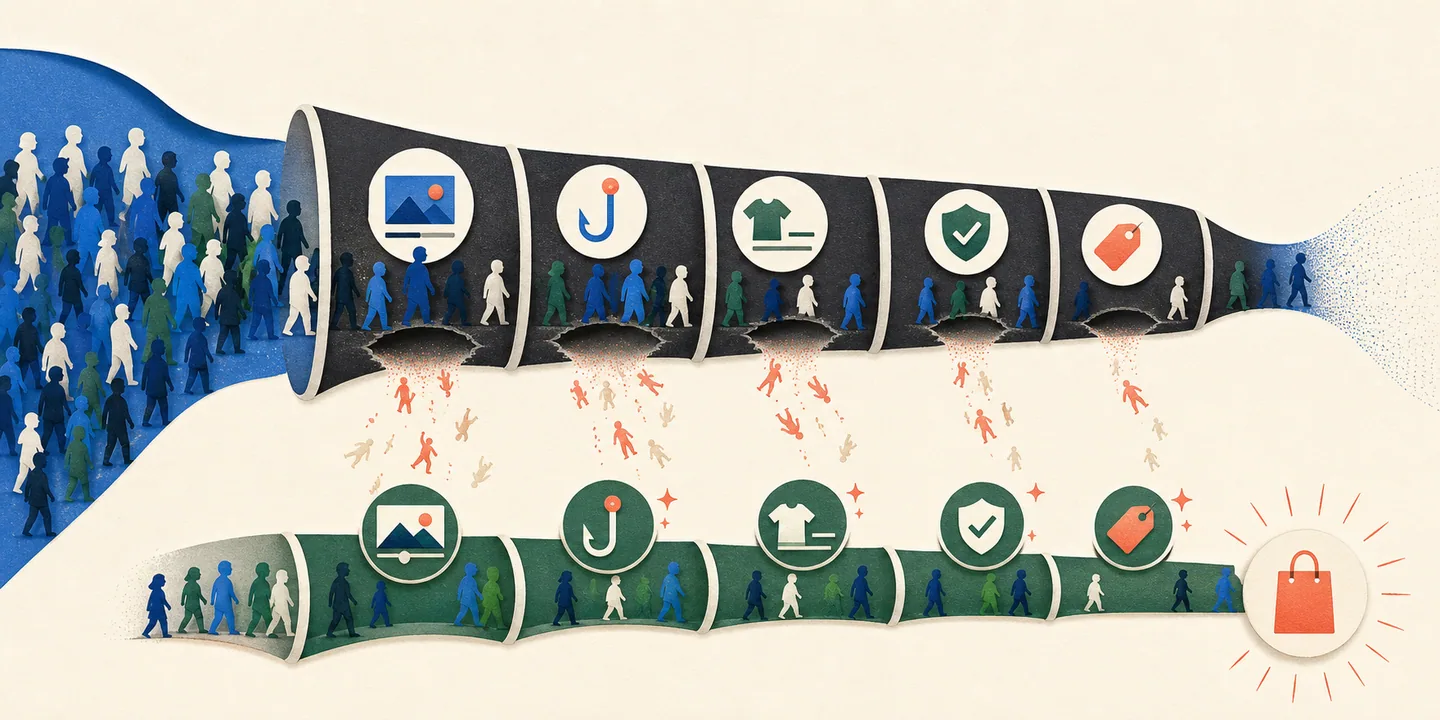
To diagnose where you’re bleeding sales, you need to understand the five failure points that kill conversions on TikTok Shop.
Failure Point #1: Your Thumbnail Isn’t Stopping the Scroll
Before anyone watches your video, they see a static frame. Either you selected it, or TikTok grabbed a random moment from your content. If that frame doesn’t stop the thumb, nothing else matters.
The data is unambiguous: Research analyzing 300 TikTok thumbnails found that videos featuring human faces significantly outperformed those without. A Georgia Tech study found that images with faces received 38% more likes and 32% more comments. Faces create connection. Connection stops thumbs.
What failure looks like:
- Blurry frames selected from fast-moving content
- Poorly lit product shots with no context
- Random moments that don’t represent your value proposition
- Overly polished, commercial-style thumbnails that scream “advertisement”
What works:
- Clear, well-lit faces showing genuine emotion
- Products shown in context—being used, not just displayed
- Bright, contrasting colors that stand out in the feed
- Text overlays that create curiosity gaps (“I wish I knew this before…”)
The TikTok audience has been trained to scroll past traditional advertising. Your thumbnail needs to feel native—like content from a friend, not a brand.
Here’s where most sellers waste weeks guessing: Instead of A/B testing thumbnails live and burning impressions on losers, upload your candidates to Kettio and have synthetic TikTok shoppers rank them. The feedback tells you why one works—“the face feels authentic” versus “this looks like an ad I’d skip.” You know the winner before you post.
Failure Point #2: Your Hook Is Getting Views, Not Buyers
TikTok’s own creative guidance is explicit: introduce your content proposition within the first three seconds. This isn’t arbitrary. The algorithm evaluates content quality partly by watch-time in those opening moments. Low engagement early signals poor content, which suppresses distribution.
But here’s what most sellers miss: your hook isn’t just about stopping the scroll. It’s about qualifying your audience.
A generic hook like “You won’t believe this product!” might rack up views, but they’re the wrong views—curiosity clicks from people who will never buy. A specific hook like “If you struggle with hormonal acne, this $12 cleanser changed everything” filters immediately. Fewer total views. Dramatically higher purchase intent.
Four hook archetypes that convert:
| Hook Type | Example | Why It Works |
|---|---|---|
| Bold Statement | “Stop wasting money on skincare that doesn’t work.” | Challenges beliefs, promises value |
| Intriguing Question | “What if the best gym leggings cost under $30?” | Creates curiosity gap |
| Relatable Problem | “POV: You’re tired of coffee going cold.” | Immediate pain point identification |
| Transformation Tease | “I went from frizzy mess to salon-smooth in 5 minutes.” | Promises clear before-and-after |
The common thread? Each makes a specific promise the rest of the video must fulfill. Vague hooks get views. Specific hooks get sales.
There’s a shortcut most sellers miss: Test your hook variations in Kettio against a synthetic panel of your exact target demographic. You’ll see which hook qualifies buyers versus which one just gets curiosity clicks. The written feedback is the key part—responses like “this feels like it’s for me” versus “cool but I wouldn’t buy this.” That’s the difference between views and sales, and you’ll know it before you spend a dollar on traffic. Here’s how to structure a creative testing workflow that catches these issues early.
Failure Point #3: Your Listing Breaks the Promise
This is where most sellers lose the sale without realizing it. Your video makes a promise—explicit or implicit—and your product listing fails to reinforce it.
Real example from a beauty brand:
- Video promise: “This vitamin C serum faded my dark spots in 3 weeks.”
- Product listing: Generic description focusing on ingredients (“Contains 15% L-Ascorbic Acid…”) with no before/after imagery, no timeline expectations, no social proof validating the transformation claim.
The disconnect kills conversion. The viewer clicked expecting validation of a specific promise. Instead, they found a commodity product page that could describe any vitamin C serum.
E-commerce professionals call this “ad scent”—the continuity between what attracted the click and what greets the visitor. Break the scent, break the sale.
The fix: Your listing must echo and amplify your video’s promise. If your video shows transformation, your listing needs before/after photos. If your video emphasizes speed (“works in 3 weeks”), your listing needs reviews mentioning timeline. If your video highlights a specific feature, that feature should dominate your product images.
You can skip the trial-and-error: Upload your video creative and your product listing side by side in Kettio and have synthetic shoppers review them together. If the feedback says “the video made me expect before/after photos but the listing is just ingredient specs”—you found your leak without spending a cent on traffic. Fix it before you go live.
Failure Point #4: You’re Missing Critical Trust Signals
TikTok Shop operates on a trust deficit. Users aren’t navigating to your established website with professional design and security certificates. They’re buying from a platform many still associate with entertainment, not commerce. Your listing must overcome that hesitation aggressively.
The trust elements that matter:
Verified reviews. Listings with fewer than 20 reviews convert significantly worse than those with robust social proof. TikTok’s algorithm also prioritizes listings with frequent, recent reviews in search results.
UGC integration. User-generated content—real customers showing real results—outperforms studio photography by 3x in conversion rates. If your listing only contains polished brand images, you’re leaving money on the table.
Seller response activity. TikTok displays whether sellers actively respond to reviews. This small signal dramatically impacts perceived legitimacy.
Clear policies. Shipping timelines, return policies, and customer service availability should be immediately visible. Gen Z buyers specifically check these before purchasing.
Fulfilment badges. “Fulfilled by TikTok” badges and “Free Returns” indicators have been shown to increase conversion rates from 3.8% to 6.1% in documented cases.
Every uncertainty is a reason not to buy. Your job is to eliminate uncertainty at every touchpoint.
The faster path to trust: Run your product page through Kettio’s synthetic shopper testing and the feedback will surface trust gaps unprompted. “I don’t know if this brand is legit.” “Where are the reviews?” “I can’t tell when this would ship.” You don’t have to guess what’s causing hesitation. The feedback points you directly to the fix. Learn more about how synthetic audiences work and why they surface issues real users would spot.
Failure Point #5: Your Pricing Lacks Context
Pricing on TikTok Shop follows different rules than traditional e-commerce. The audience is primed for impulse purchases, but that impulse needs to feel like a smart decision—not an irresponsible splurge.
Common pricing errors:
No reference point. Listing a product at $24.99 without context for why that’s fair. Compare to: “Similar serums sell for $60+ at Sephora. This does the same thing for $24.99.”
Missing bundle value. TikTok audiences respond exceptionally well to bundles that feel like “hacks.” A single product at $30 might feel expensive. A “Complete Starter Kit” at $45 feels like value, even if the customer only wanted one item.
Aggressive early discounting. While $19.99 typically outperforms $20, heavy discounting too early signals low quality to TikTok’s algorithm, which may devalue “clearance only” listings.
No urgency mechanisms. TikTok users move fast. If you don’t give them a reason to buy now, they won’t. Limited stock messaging, time-sensitive discounts, and “viral restock” language drive immediate action.
Test your pricing presentation: Run two price presentations against synthetic shoppers—“$24.99” versus “$24.99 (comparable products: $60+)”—and see which one drives higher purchase intent. The same price can convert wildly differently depending on how you frame it. Know which frame wins before you commit to it.
The Diagnostic: Find Your Specific Leak
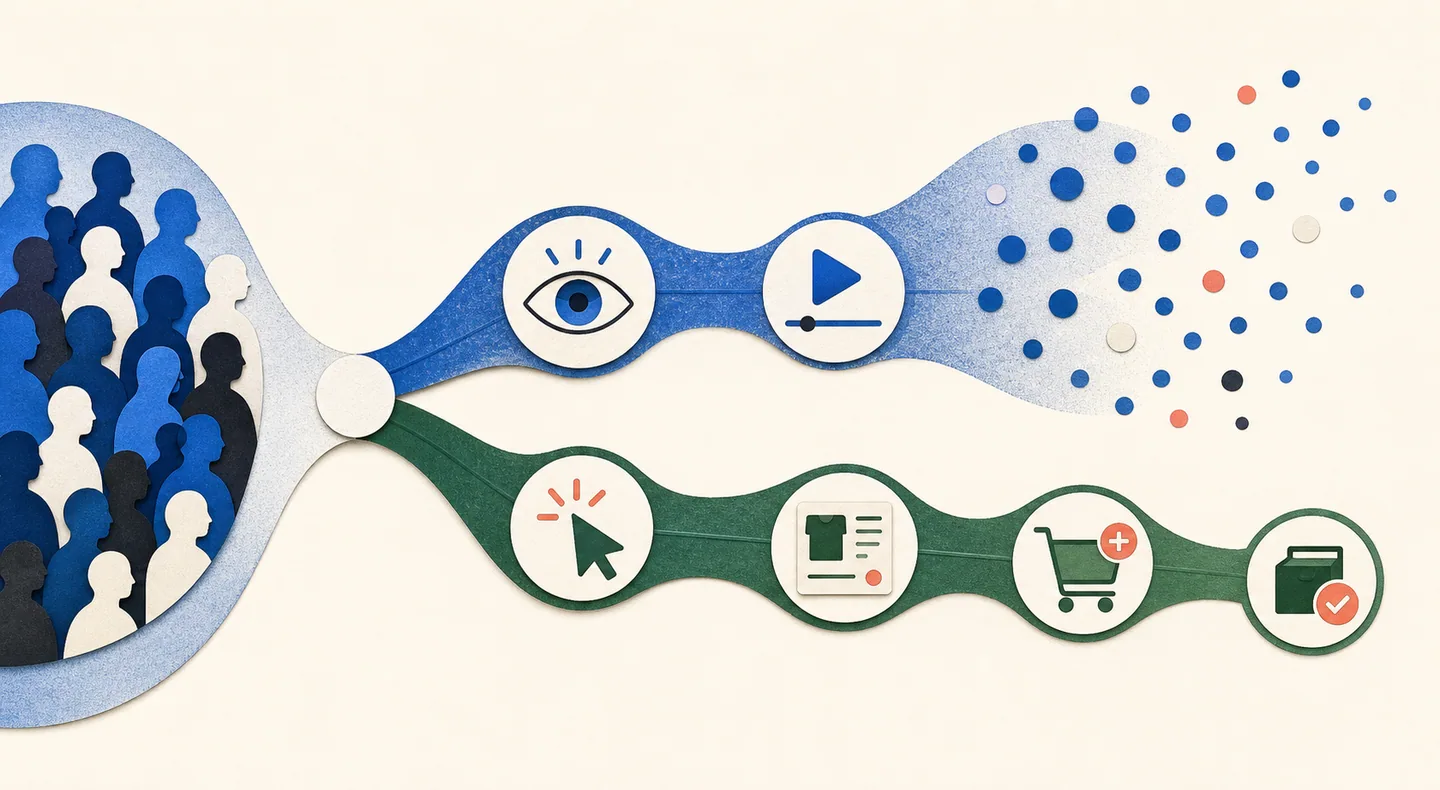
Knowing the failure points is useful. Diagnosing which one is killing your sales is essential.
flowchart TD
    A["High Views, Low Sales"] --> B{"Getting clicks?"}
    B -->|Yes| C["Problem: Product Page"]
    B -->|No| D["Problem: Creative"]

    C --> E{"Add to cart rate?"}
    E -->|Low| F["Fix: Trust signals, Price, Description"]
    E -->|Good| G["Fix: Checkout friction, Urgency"]

    D --> H{"Watch time?"}
    H -->|Low| I["Fix: Hook, First 3 seconds"]
    H -->|Good| J["Fix: CTA, Product tagging"]

    style A fill:#ff6b6b,color:#fff,stroke:#ff6b6b
    style F fill:#ffd43b,color:#333,stroke:#ffd43b
    style G fill:#ffd43b,color:#333,stroke:#ffd43b
    style I fill:#ffd43b,color:#333,stroke:#ffd43b
    style J fill:#ffd43b,color:#333,stroke:#ffd43b
Step 1: Check your click-through rate. If you’re getting views but no clicks, your problem is upstream—either your thumbnail/hook isn’t compelling, or your product tagging is unclear. Focus on creative optimization before touching your listing.
Step 2: Analyze add-to-cart rate. If clicks are happening but carts remain empty, your product page is the culprit. Review trust signals, price positioning, and promise-reality alignment.
Step 3: Examine checkout abandonment. If carts are filling but purchases aren’t completing, you have a friction problem—either technical (checkout flow) or psychological (urgency, final trust barriers).
The faster way through this: Running live traffic through each branch of this flowchart takes weeks and burns budget on underperforming variants. In Kettio, you can test every element synthetically—thumbnails, hooks, listings, pricing—all in one session. The flowchart becomes something you can run through in an afternoon instead of over weeks of expensive trial and error. For a deeper dive on TikTok-specific tactics, check out our TikTok ad creative playbook.
What Transformation Looks Like
Scenario: Skincare brand struggling with conversion
| Element | Before | After |
|---|---|---|
| Video | Generic product demo, studio lighting | UGC-style testimonial, natural lighting |
| Hook | “Check out this amazing serum!” | “I spent $300 on skincare before finding this $35 dupe” |
| Thumbnail | Product bottle on white background | Creator’s face showing skin improvement |
| Listing | Ingredient-focused, 3 product photos | Benefit-focused, before/after gallery, 6 images |
| Price | $35 with no context | $35 with “Comparable products: $80+” anchor |
| Result | 100K views, 0.3% conversion | 75K views, 2.8% conversion |
The view count dropped. Revenue quadrupled.
The Bottom Line
TikTok Shop is one of the most significant opportunities in e-commerce—but only for sellers who understand that reach and revenue are different games. The platform will give you views. Converting those views is your job.
The fixes aren’t mysterious. They’re systematic, testable, and implementable. Start with the diagnostic. Identify your leak. Fix it. Test. Repeat.
Your next viral video doesn’t need more views. It needs better conversion.
Focus there. The revenue will follow.
🏪 Connect Your TikTok Shop
Stop diagnosing with live traffic. Kettio’s TikTok Shop tool pinpoints exactly where your funnel leaks—audit listings, images, and descriptions before your next dollar goes to waste.
Or test individual creatives against synthetic shoppers who think like your buyers.
Try it on your ads
Compare your own ads, free.
Upload two static ads, choose your buyer, and get a quick prediction with clear next steps. No signup or credit card.
Find my winning ad →