
AI can make you ten ads in ten seconds. The problem is that eight of them are slop, and the platform won’t tell you which two aren’t until you’ve already spent money finding out. A creative flow test is how you find the winner first, before a dollar of media goes live.
What Is a Creative Flow Test?
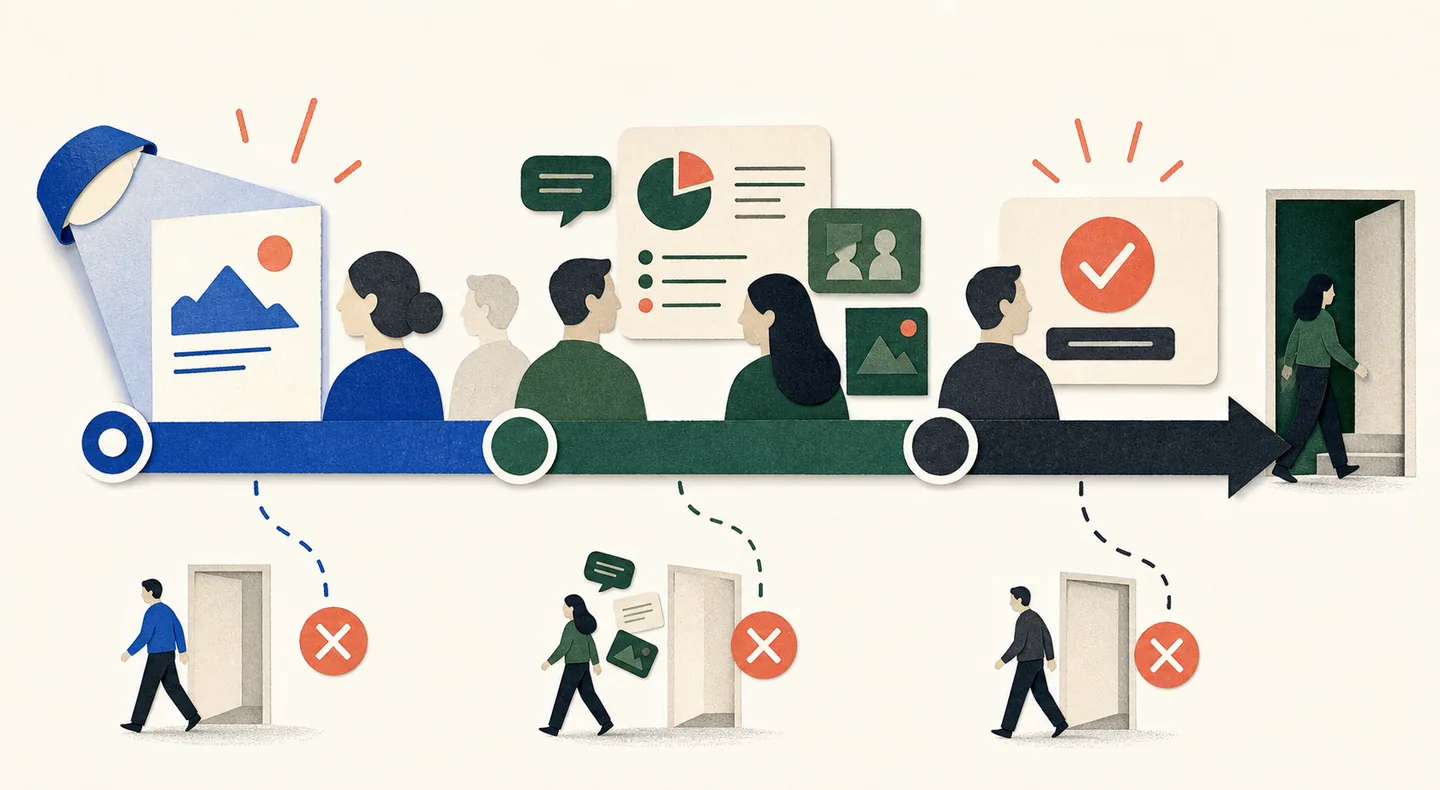
A creative flow test is a pre-launch evaluation of how an ad moves a viewer through the creative flow — scroll-stop, attention, comprehension, and intent — by running each variant past a synthetic version of your real target audience before you spend on media.
The word that matters is flow. A static “creative score” grades an image the way a teacher grades homework: in isolation, against an average. A flow test instead asks the question your buyer actually answers in real time — does this ad stop my thumb, hold my attention long enough to land the message, and push me toward wanting the thing? That sequence is the flow, and a winning ad has to clear every step of it.
Creative Flow Test vs. A/B Test
People conflate these constantly, so here is the clean distinction:
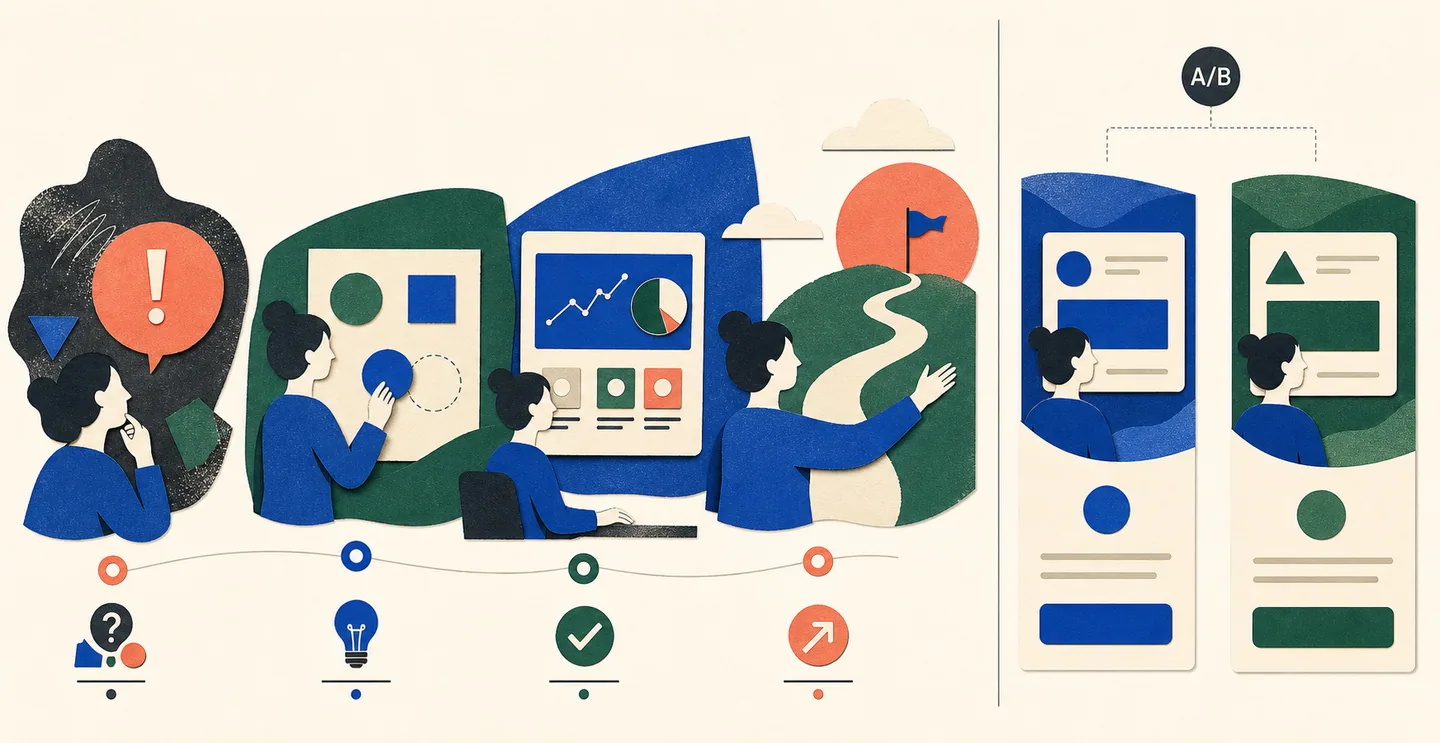
An A/B test runs live ads against real traffic. You pay for the impressions, wait seven-plus days for statistical significance, and only then learn which creative won. It is accurate, but it is slow and it costs you the exact budget you were trying to protect. By the time it settles, your campaign window may already be closing.
A creative flow test happens before launch. Instead of spending real money on real strangers, you run each variant through synthetic personas built to match your real buyer and get a ranked prediction in minutes. You are not replacing the market’s verdict — you are getting a fast, cheap preview of it so you only put budget behind the variant that already proved itself.
The short version: A/B testing spends to learn. A flow test learns, then spends. We went deeper on why pre-launch testing is replacing A/B tests here.
Why “Creative Score” Isn’t a Flow Test
Know which ad to scale before you spend.
Upload two static ads, choose your buyer, and get a quick prediction with clear next steps. No signup or credit card.
Most AI ad generators ship a predictive score — AdCreative.ai has its Creative Score, others have their own flavors. These are pattern-matched against historical high-performing ads across the whole platform. They tell you whether your creative looks like past winners on average.
That is genuinely useful for filtering obvious junk. It is not a flow test, because it has no knowledge of your specific audience, your offer, or the platform you are running on. A “88/100” trained on a dataset full of fashion and DTC apparel tells you almost nothing about whether your $200 joint-supplement ad will stop a skeptical 52-year-old on Facebook. A flow test judges your variants against your buyer, which is the only comparison that predicts the click. Here is how that plays out against AdCreative.ai specifically.
How to Run a Creative Flow Test
The mechanics, end to end:
1. Create your variants. Generate them inside Kettio, or bring what you made in AdCreative.ai, Canva, InVideo, or anywhere else. Images or video stills, no format restrictions.
2. Define your real buyer. Age range, platform behavior, buying intent, brand familiarity, how skeptical and how price-sensitive they are. The more specific you get, the sharper the prediction — “women 25-34” is weak, “skeptical first-time buyer comparing three brands on mobile” is strong.
3. Run the flow test. Kettio runs every variant through synthetic personas matching that profile and scores the full creative flow, not just surface aesthetics.
4. Read the ranking and ship the winner. You get an ordered list with written rationales — why a persona paused on variant B but scrolled past variant A. Launch the winner. Leave the slop in the drafts folder.
Does Predicting It Before Launch Actually Work?
Fair question, and the honest answer is: it is only worth doing if the prediction tracks reality. Kettio’s flow-test algorithm is research-backed and validated against real ad performance, reaching a 0.6 to 0.7 correlation on real datasets and 70.3% within-product pairwise accuracy on click-through rate. It beat GPT-4o on a 1,089-image academic benchmark with zero training data. The full benchmark writeup is here.
That is the difference between a flow test and a vibe. One is a guess with extra steps; the other is a measured prediction you can put budget behind.
The Takeaway
Generation is solved. Selection is not. The teams winning in 2026 are not the ones generating the most ads — they are the ones who flow test before they launch and only ship what already proved it can win. See how the creative flow test works, or find your winning ad.
Frequently asked questions
What is a creative flow test in marketing?
A creative flow test is a pre-launch evaluation of how an ad moves a viewer through the creative flow — scroll-stop, attention, comprehension, and intent. Each variant is run past a synthetic version of your real target audience so you can find the winner before spending on media.
How is a creative flow test different from an A/B test?
An A/B test runs live ads against real traffic, so you spend money and wait days for significance. A creative flow test happens before launch in minutes, predicting which variant wins so you only put budget behind the one that already proved itself.
Do I need a media budget to run a creative flow test?
No. A creative flow test needs only your creative variants and a description of your target audience. There is no ad account connection and no media spend required to get ranked results in Kettio.
Compare your own ad creatives — free.
Upload two static ads, choose your buyer, and get a quick prediction with clear next steps. No signup or credit card.
Find my winning ad →