
A/B testing ads is the orthodoxy of performance marketing. You have two creatives. You split your audience. You wait. The data decides. It’s scientific. It’s principled. And it’s increasingly the wrong tool for most of the situations where teams are using it.
This isn’t a contrarian take for its own sake. The structural problems with A/B testing as the primary creative testing software workflow are real. They’re getting worse as CPMs rise and campaign windows shrink, and the alternative, pre-launch AI testing, has crossed the threshold of being validated and practical.
The Three Structural Problems with A/B Testing
A/B testing works in the lab. In practice, three structural problems limit its usefulness for most creative decisions.
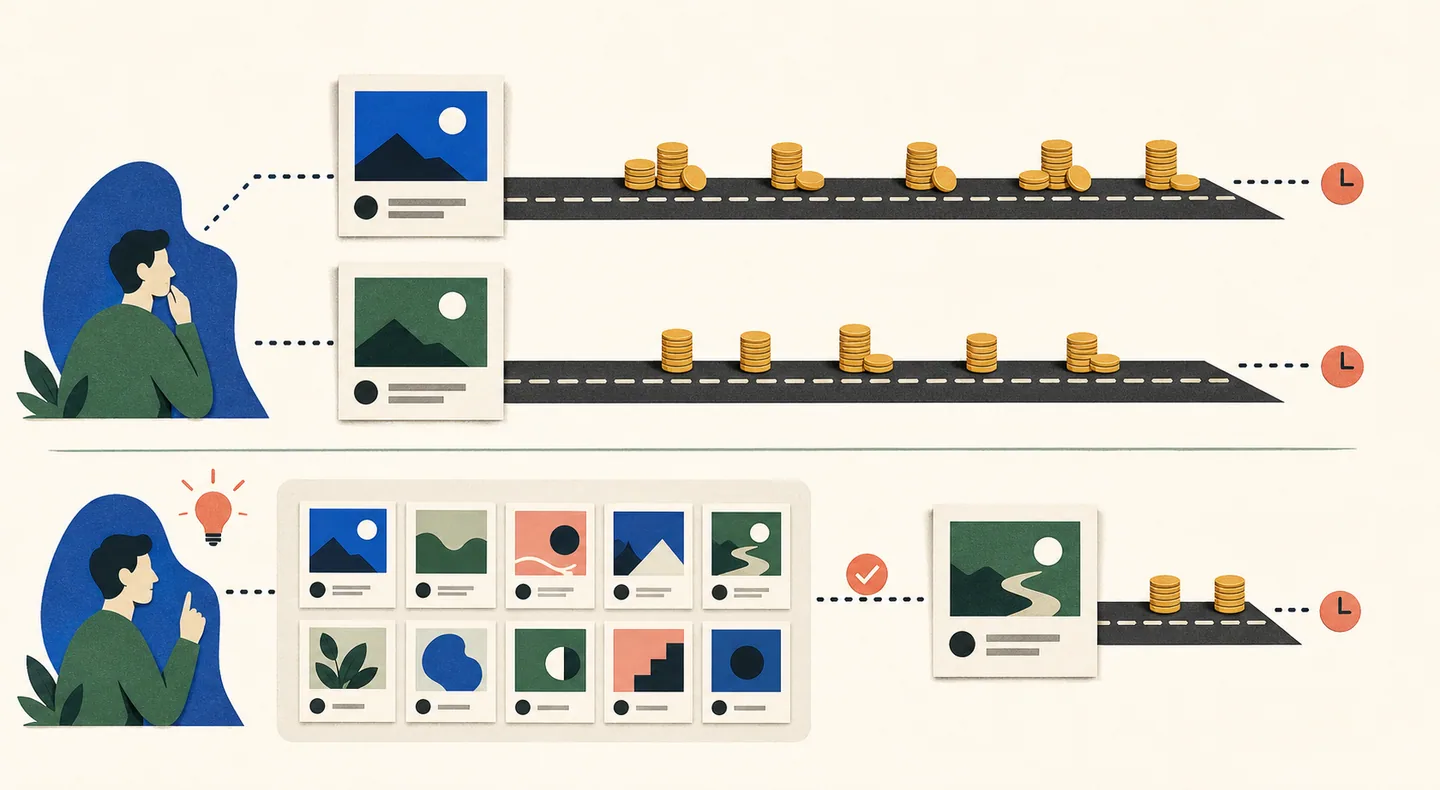
Problem 1: You pay for the learning. Every A/B test is a tax. You’re not just spending to acquire customers. You’re spending to acquire data about which creative acquires customers. The losing variant in every test represents real budget allocated to a known underperformer. At $500/day with 4 creatives in test, you’re burning $1,500/day on losers while you wait for significance. That’s not a rounding error on most campaign budgets.
Problem 2: It takes too long to be useful. A properly structured A/B test with 95% confidence requires weeks at anything less than significant daily spend. The average DTC brand with a $3,000/month ad budget is running tests that never reach statistical significance. They’re making decisions based on directional noise and calling it data. This is worse than using no test at all, because it creates false confidence.
Problem 3: It only tests what you’ve already committed to. By the time your A/B test resolves, you’ve already built all the creatives, launched the campaign, briefed the next batch of variants, and are running a new test. The information arrives too late to change the decision it was supposed to inform. A/B testing is a post-mortem, not a pre-flight.
What “Pre-Launch Testing” Actually Means
Pre-launch testing is the idea that you should know which creative will win before you spend on media, not after. The mechanism is audience simulation: build a synthetic representation of your target buyer and expose your creative variants to that persona before launch. The simulation predicts which creative your audience prefers.
This isn’t new as a concept. Consumer panels, focus groups, and copy testing have existed for decades. The problem was always cost and speed: a proper panel study costs $10,000 to $30,000 and takes 6 weeks. By the time the results arrived, the campaign had already launched.
What AI has changed is the speed and cost of audience simulation. Building a synthetic persona that can evaluate an ad creative against grounded behavioral heuristics now takes seconds. Running 10 variants through that persona takes minutes. The cost drops from $10,000 to a fraction of that.
The Data Behind Pre-Launch AI Testing
Pre-launch testing is only useful if the predictions are accurate. Kettio’s scoring system hit 58% pairwise accuracy on an academic benchmark of 1,089 real ads, beating GPT-4o zero-shot with no training data. Full methodology and results here.
58% to 70% accuracy sounds modest. In context, it’s a meaningful edge. A fair coin gets 50%. A team picking based on internal review gets maybe 52 to 55% on a good day. Going from 52% to 70% correct launch decisions, at scale, over a full year of campaigns, is a significant efficiency gain. That’s the case for pre-launch testing.
This Doesn’t Kill A/B Testing Entirely
A/B testing isn’t literally dead. It remains the right tool for certain situations: when you have significant scale and budget, when you need to validate a creative that pre-launch testing flagged as a strong contender, when you’re optimizing a campaign that’s already performing and want to find the ceiling.
What pre-launch testing kills is the default use of A/B testing: the assumption that you can’t make a launch decision without running a live test. Most teams use A/B testing because it’s the only feedback mechanism they have before launch. Give them a better feedback mechanism and most creative decisions don’t require a live test at all.
The New Workflow
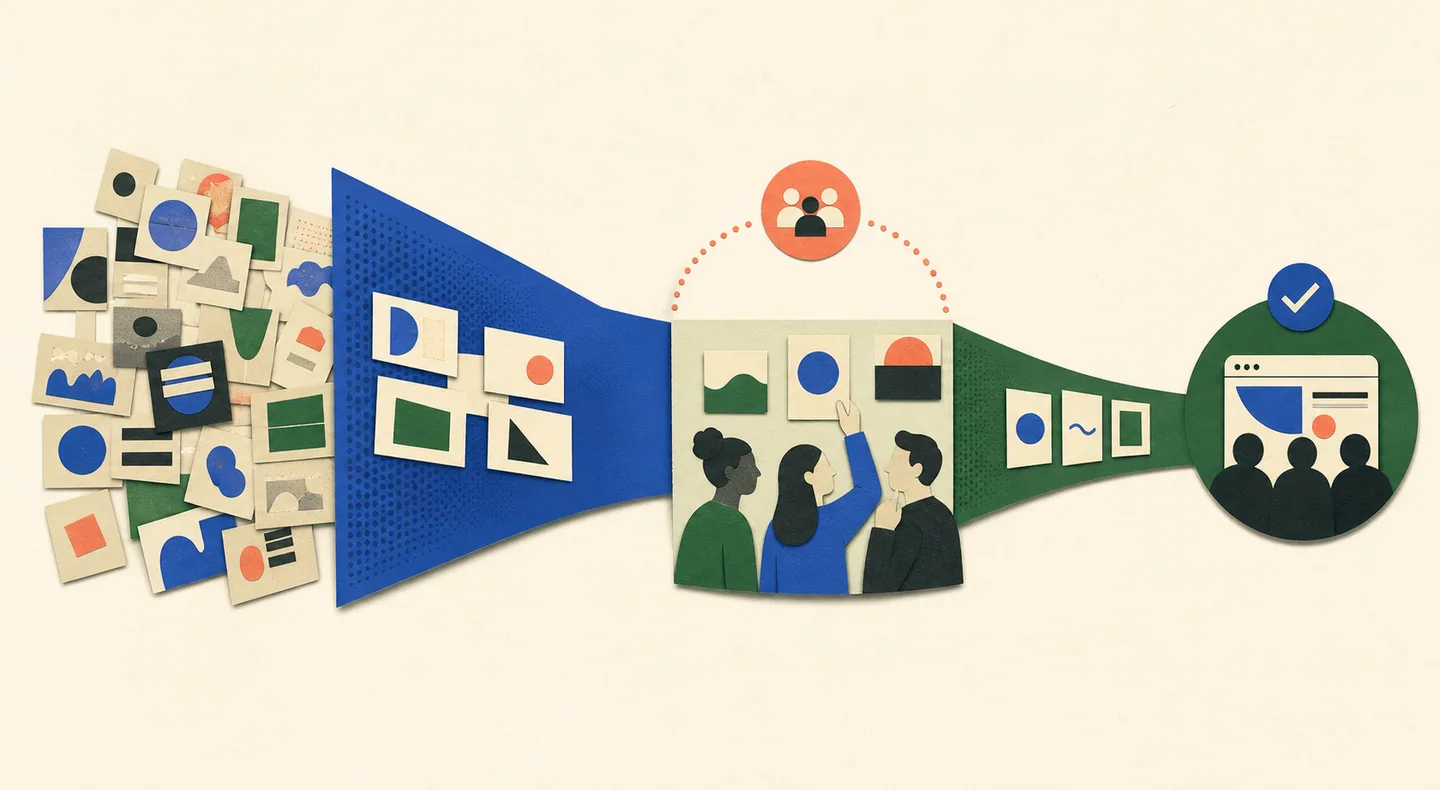
The workflow that’s replacing spend-to-learn A/B testing looks like this: generate creative variants (using AI tools or traditional production), test AI ads against synthetic audience personas before launch, launch the predicted winner, and use live campaign data to validate and refine the next generation cycle.
A/B testing moves to the validation layer, not the selection layer. You’re not using live spend to figure out which of 5 creatives wins. You’ve already done that with pre-launch testing. You’re using live spend to confirm that the predicted winner is actually winning and to find the headroom for optimization.
This is a more efficient allocation of your media budget. The selection decision, which creative to launch, is made with the ad testing platform before you spend. The optimization decision, how to scale the winner, is made with live data after.
Read the research behind our benchmark results in how we beat ChatGPT on ad scoring. For the complete guide on how Facebook’s own A/B test tool works and where it breaks down, see our Facebook A/B testing guide.
The selection decision — which creative to launch — is the expensive one to get wrong. Pre-launch testing moves that decision upstream, before spend. A/B testing validates. The difference between using both in sequence and using only one is the difference between confirming winners and discovering them on your media budget. See how Kettio handles the selection layer.
Try it on your ads
Compare your own ads, free.
Upload two static ads, choose your buyer, and get a quick prediction with clear next steps. No signup or credit card.
Find my winning ad →