
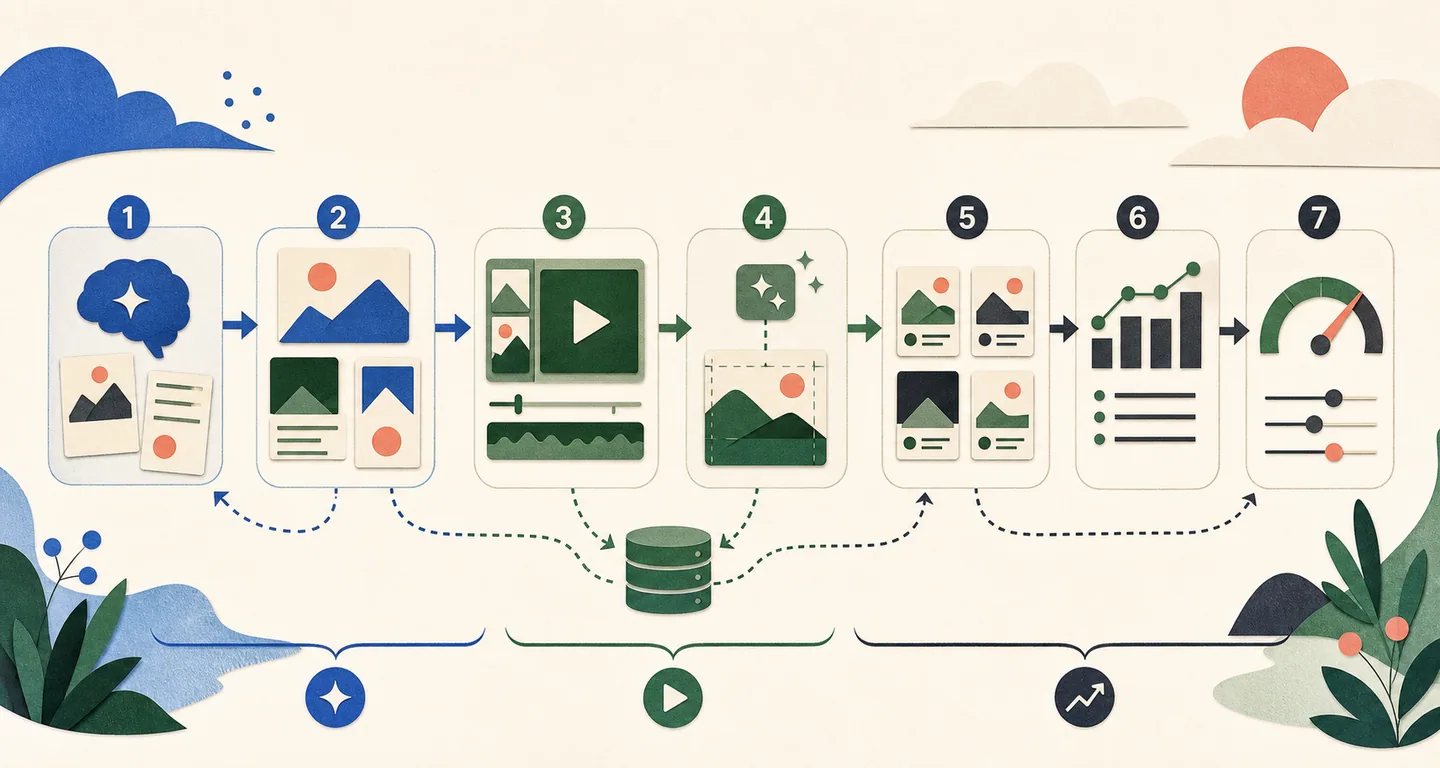
There are now dozens of AI ad tools: generators, optimizers, testing platforms, copy tools, video tools, and most of them claim to do everything. We’ve organized this roundup by job-to-be-done, because the best AI ad creative tool for generating variants is not the same as the best tool for figuring out which variant wins.
The three jobs: Generate. Test. Optimize. Most tools only do one well. The honest breakdown is below.
Category 1: AI Ad Generators
These tools take your brand inputs and produce creative variants at speed. They are not testing tools. They produce candidates. What you do with those candidates is a separate problem.
1. AdCreative.ai
The most widely adopted AI ad generator for performance marketers. Connects to your brand kit, outputs batches of static image ads sized for Facebook, Instagram, and Google Display. The templates are legitimately good: trained on direct-response patterns, not generic stock photo layouts. Check their site for current pricing.
The limitation: the built-in “Creative Score” is based on pattern matching against historical ads, not audience simulation. It tells you whether your creative looks like past winners. It doesn’t tell you whether it will win with your specific buyer. Read our full AdCreative.ai review with 2026 pricing for a complete breakdown. If you’re evaluating it against other options, see our AdCreative.ai alternative page.
2. Canva AI (Magic Studio)
Canva’s AI layer has matured into a real production tool. Magic Design generates full ad layouts from a prompt. The text-to-image generator handles product photography reasonably well. If your team is already in Canva for design work, the AI features integrate cleanly into that workflow.
Canva is strongest for brands that want creative control and are willing to iterate. It’s weaker than AdCreative.ai for pure batch generation: you’re still assembling layouts, not just clicking “generate.”
3. InVideo AI
InVideo is a widely used tool for AI-generated video ads. You describe your product and target platform, and it produces a video with stock footage, voiceover, and captions. The output quality has improved significantly in the last year: the jump cuts are smoother, the pacing is more natural.
For brands running paid social video (Reels, TikTok, YouTube pre-roll), InVideo is the fastest path from concept to draft. It’s not going to replace a production studio, but for testing video concepts before committing to production, it’s excellent.
4. Pencil
Pencil targets agencies and in-house teams running high-volume paid social. It integrates with Meta and TikTok ad accounts to pull performance data, then generates new variants predicted to outperform your existing creatives. The feedback loop is more closed than most generators: it’s learning from your actual account data, not just general patterns.
The tradeoff: it’s expensive and requires significant ad spend history to work well. Not the right fit for smaller accounts or new product launches with no performance data.
Category 2: Ad Testing Platforms
This is the most undersupplied category in the stack. Most teams either skip testing entirely or use Facebook’s built-in A/B testing, which requires real spend and takes weeks to generate statistical confidence.
5. Kettio
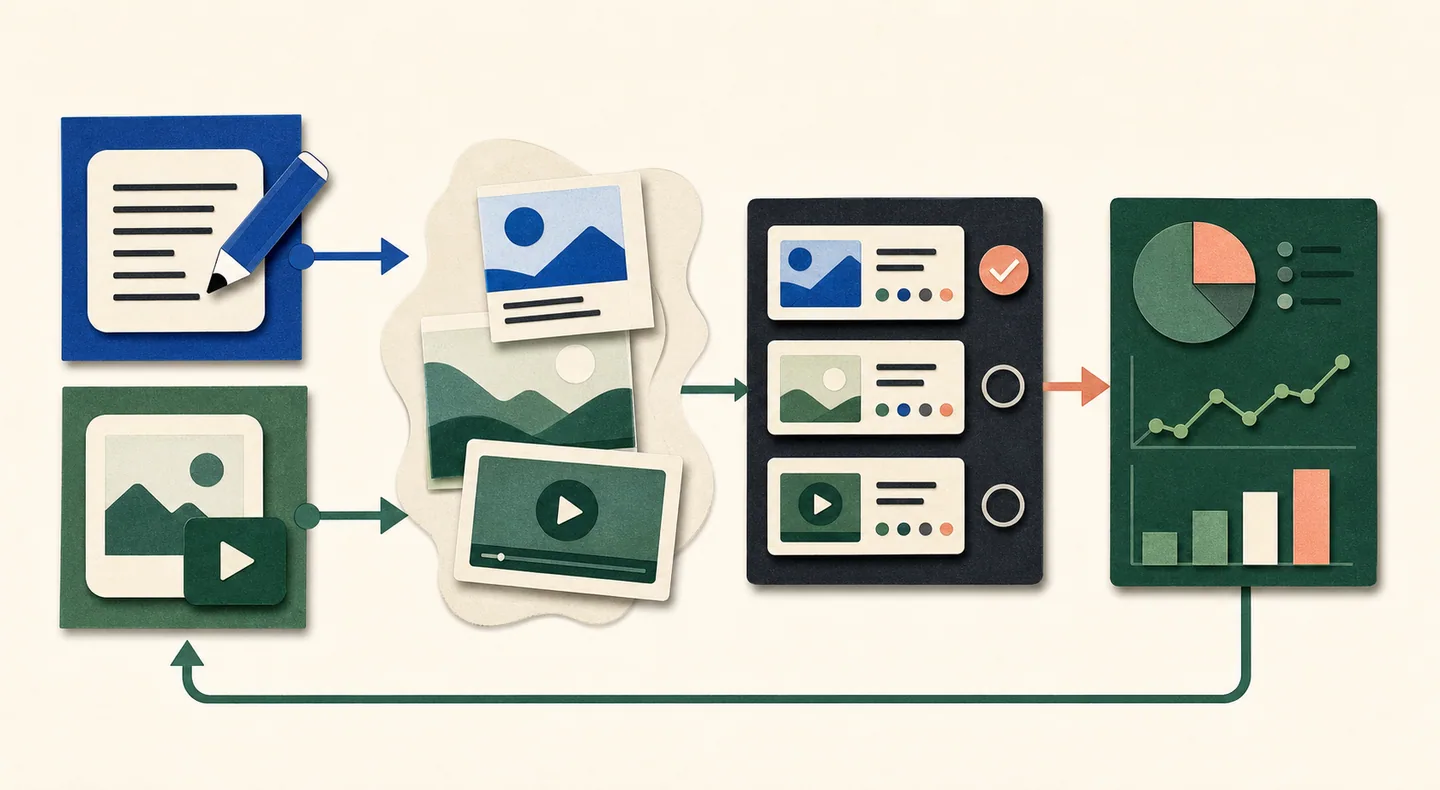
Kettio focuses on the pre-launch ranking stage. You upload the creative variants you generated in AdCreative.ai, Canva, InVideo, or elsewhere, define the buyer and goal, and receive an ordered shortlist with written rationales and confidence information.
The approach is grounded in published research and validated against a real academic benchmark. We ran 1,089 scored ads through the pipeline and beat GPT-4o zero-shot—the full numbers are in that post.
The practical implication: you can generate 10 variants in AdCreative.ai, test them all in Kettio before spending a dollar on media, and launch only the predicted winner. That’s the workflow. See how the testing works.
6. Neurons
Neurons uses neuroscience-based attention modeling to predict where viewers’ eyes will land on a creative. The attention heatmaps are genuinely useful for layout decisions: you can see whether your CTA is getting attention or buried. The platform has expanded into brand recall and emotional response prediction.
Neurons answers a different question than Kettio. It tells you where attention goes. Kettio tells you whether attention converts to intent. Both are useful. They’re not substitutes.
Category 3: Ad Optimization Platforms
7. Madgicx
Madgicx connects to your Meta and Google accounts and runs autonomous campaign optimization, adjusting budgets, bids, and audiences based on performance data. The “Ad Library” feature mines competitor ads for creative intelligence. For teams that have already found a winning creative and want to scale it efficiently, Madgicx is strong.
It’s explicitly a post-launch tool. It optimizes what you’ve already launched. It does not predict which of your pre-launch variants will win.
The Stack That Actually Works
The gap most teams have is between generation and launch. They generate fast (AdCreative.ai, Canva, InVideo), then launch and learn, which means burning real budget to find out which creative works. The missing middle layer is pre-launch testing.
The modern creative testing software stack looks like this: generate variants fast, test against your target audience before launch (Kettio), then optimize spend on the winners (Madgicx). Each tool does its job. None of them try to do all three.
For a deeper dive on any of these tools, check out our complete guide to AI ad creatives for the full generation-to-launch workflow.
The gap most teams have is between generation and launch. Generation is a solved problem. Testing is the missing middle. For the full picture on why that gap is expensive to leave open, the case against A/B testing as the default is worth reading next.
Try it on your ads
Compare your own ads, free.
Upload two static ads, choose your buyer, and get a quick prediction with clear next steps. No signup or credit card.
Find my winning ad →